Test with the real facestock and liner
Film Label Adhesive
Film label adhesive selection should match facestock, liner, coating method, target surface, aging condition and the required balance between holding and removability.
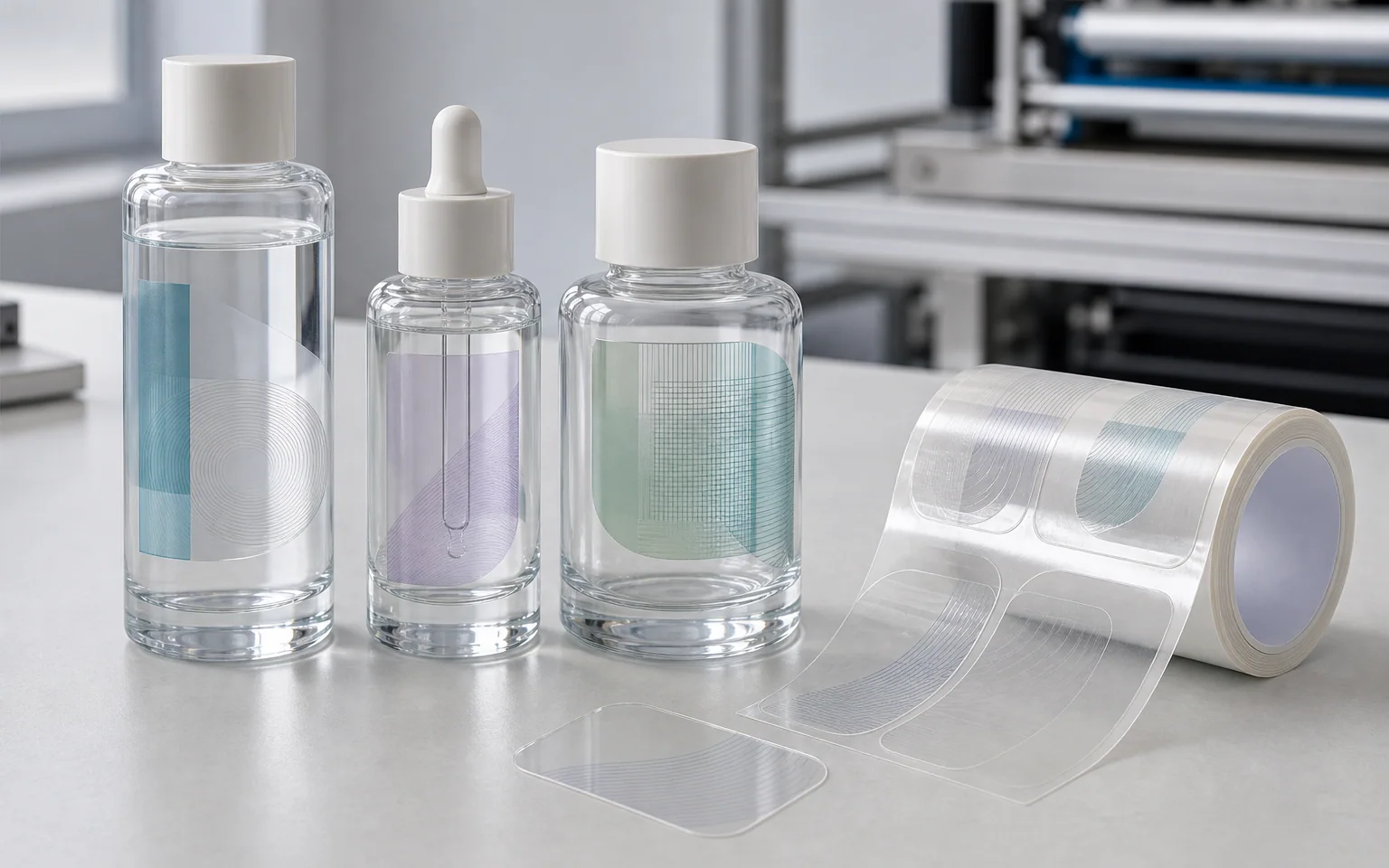
Application requirements
What the adhesive route needs to handle
Facestock and liner matchingCoating process compatibilityPeel, tack and shear balanceEdge bleed and appearance control
Common substrates
PETBOPPPPPEPVCPaperGlassHDPE containers
Common failure problems
- Label lifting
- Adhesive bleed
- Poor wet-out
- Residue or surface damage
- Unclear removable boundary
Selection logic
Start with the use case, then narrow the route by substrate, process window and failure mode.
Removable, semi-removable or permanent directionTransparent label appearanceDie cutting and liner releaseStorage and aging condition
Recommended product routes
- FL-5068 for removable film labels
- FL-4561 for semi-removable PET and BOPP labels
- AC-5309H for stronger film label PSA
Sample request checklist
- Facestock and liner
- Target container or surface
- Coating method
- Removal or holding target
- Document needs
Testing suggestions
Check die cutting, edge bleed and label lifting
Confirm peel after storage and aging
Recommended models
FL-5068
FL-5068 Water-Based Removable Film Adhesive
Water-based removable adhesive for protective film, removable labels and temporary positioning where peel growth and residue must be checked under real use conditions.
Review product fit FL-4561FL-4561 Water-Based Semi-Removable Film Adhesive
Water-based semi-removable film adhesive for labels that need stronger holding than light removable systems.
Review product fit AC-5309HAC-5309H High-Performance Film Label PSA
Acrylic emulsion for higher-grade film labels and fine label printing applications.
Review product fit AC-5406AC-5406 High-Tack PSA Emulsion
Water-based high-tack PSA emulsion for film packaging, decorative materials and surface protection film applications.
Review product fitRelated technical resources
How to Choose Water-Based PSA for Film Labels
Film label PSA selection starts from facestock, liner, target surface, coating method and the required balance between holding and removability.
Why Removable Adhesives Need Dwell-Time Testing
A removable adhesive can look acceptable in a short test and still change after storage, heat exposure or long dwell time on the final surface.
FAQ
When should a semi-removable adhesive be tested?
Use a semi-removable route when the label needs stronger holding than a removable adhesive, then confirm removal after dwell-time testing.
Request a sample for this application
Send us your substrate, coating method and current bonding problem. We will suggest a sample route before sending detailed TDS.
Information to include
- Facestock and liner
- Target container or surface
- Coating method
- Removal or holding target
- Document needs