Balances surface hold against deep foam penetration
Product codeHF-5082
Foam Flocking Adhesive
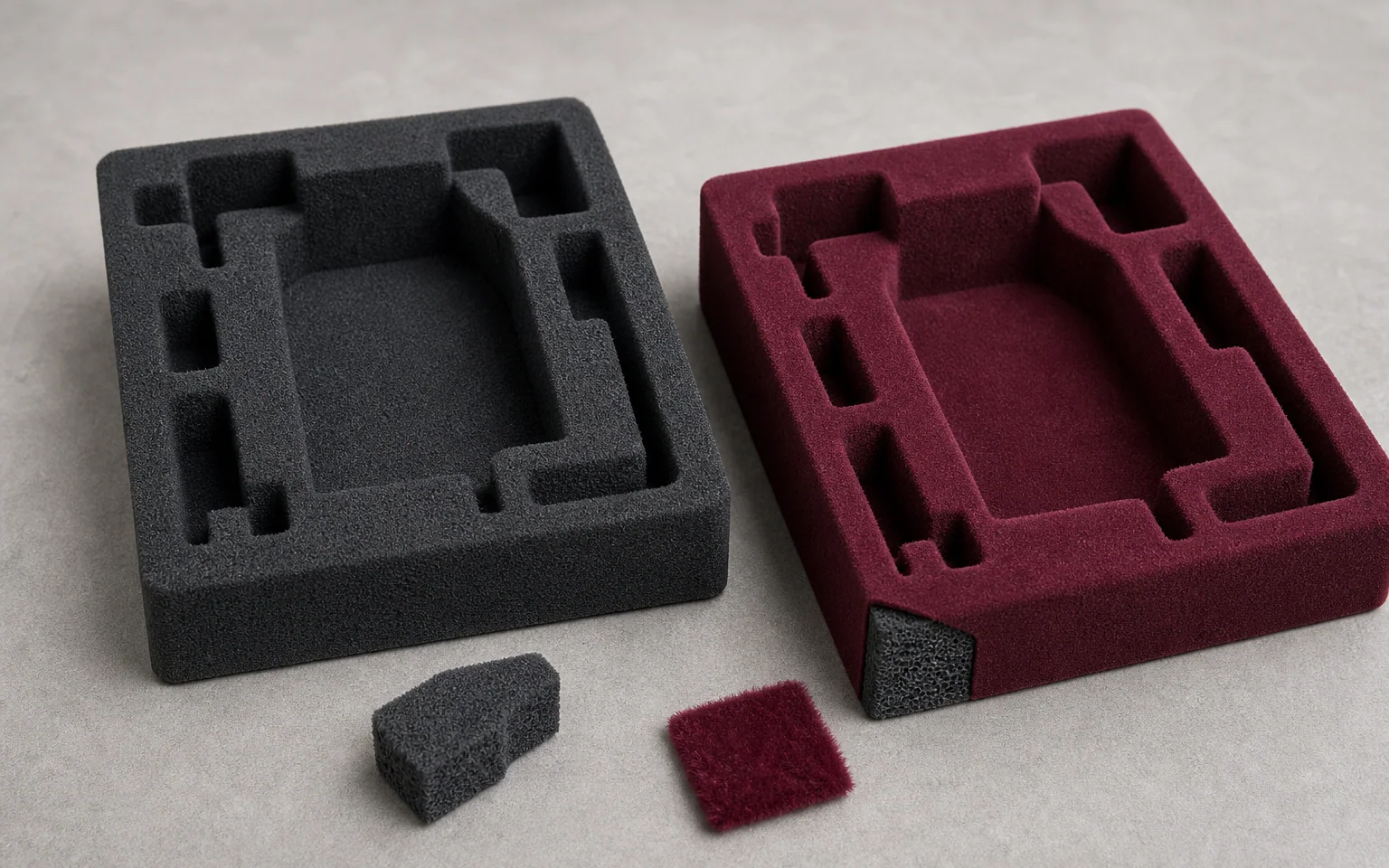
Water-based foam flocking adhesive for sponge, toy parts and packaging inserts where penetration, hand feel and fiber anchoring must be balanced.
Application fit highlights
Why evaluate HF-5082 for your application
Screens flock anchoring without sacrificing soft hand feel
Supports roller- and spray-application trials
Application risks
Problems to check before bulk production
Adhesive disappears into the pores
Deep absorption can leave too little film at the surface for the flock fiber to anchor.
The flock holds but the part becomes hard
Increasing coat weight alone can reduce softness and rebound, so hand feel and adhesion should be judged together.
A small sample passes but production sheds flock
Foam density, pore size, fiber and coating variation should be recorded across production materials.
Flocking and drying windows do not match
The interval between coating, flocking and drying changes the surface state available to receive fiber.
What this product is for
HF-5082 is a water-based flocking adhesive for foam and sponge parts where the adhesive must leave enough film at the surface to anchor flock without making the porous part unnecessarily hard.
This page is written for application screening and sample discussion. Final performance should be confirmed with the buyer's substrate, process route, test method and acceptance standard.
Suitable applications
- Foam flocking
- Sponge toy parts
- Packaging inserts
- Gift-box foam inserts
Suitable substrates
PU foam after testingSpongePorous foamComposite foam surfaces
Screening information
Only application-facing screening information is listed here. Detailed ranges and final product data should be confirmed by TDS and sample testing.
Product familyWater-based foam flocking adhesive
Application directionFoam, sponge, toy and packaging-insert flocking
Typical substratesPU foam, sponge, porous foam and selected packaging foam
Data boundaryHand feel and anchoring must be confirmed with the actual foam and flock
Process notes and first trial checks
Record foam density, pore structure and surface contamination before coating.
Compare roller and spray coverage where both routes are available, especially on porous or shaped parts.
Balance adhesive film thickness against penetration and the required soft hand feel.
After full drying and clean-off, check flock loss through the buyer's rubbing, washing or compression test.
Frequently asked questions
What applications is HF-5082 Foam Flocking Adhesive suitable for?
HF-5082 Foam Flocking Adhesive is positioned for Foam flocking, Sponge toy parts, Packaging inserts, Gift-box foam inserts. Final suitability should be confirmed with the buyer's substrate, process and test method.
What information is needed before requesting a sample or quote?
Please provide substrate, surface treatment, coating or bonding method, drying or pressing condition, current failure mode, target test and required documents.
Can Mengze provide TDS or SDS?
TDS or SDS support can be provided after the application route and document need are confirmed.
Common failure modes
- Adhesive absorbs too deeply into the foam
- Hard hand feel or reduced rebound
- Insufficient or uneven flock anchoring
- Flock loss after rubbing, compression or washing
- Different results after a foam or fiber batch changes
Sample request checklist
- Foam material, density and pore structure
- Part shape and surface layer
- Flock fiber, length and current batch
- Roller or spray equipment
- Coating, flocking and drying interval
- Hand-feel, rubbing, compression or washing target
Testing disclaimer
Foam flocking results depend on the exact foam, pore structure, surface layer, flock, coating and drying. Confirm hand feel and anchoring with the buyer's production material and finished-part tests.
Related applications
Related technical resources
Water-Based Flocking Adhesive Selection by Substrate
Flocking adhesive selection changes when the substrate moves from paper or ABS to flexible PVC, PP, PE, metal or glass.
Flocking Adhesive Film Thickness and Open Time
Flocking adhesive film thickness and open time affect fiber anchoring, surface feel, drying speed and failure risk after rubbing or aging.
Related products
PF-2561 Paper Flocking Adhesive
Water-based paper flocking adhesive for gift boxes, greeting cards and paper crafts where absorption, pattern definition and paper deformation need to be controlled together.
AF-4588 ABS Plastic Flocking Adhesive
Water-based flocking adhesive for ABS housings and rigid ABS parts after surface cleaning and production-part testing.
VF-4588 PVC Plastic Flocking Adhesive
Water-based flocking adhesive for PVC toys, footwear materials and other PVC parts, with formulation and plasticizer effects included in testing.
Request sample, quote or TDS
Send your substrate, coating method, current bonding problem and target test method. We can suggest a sample route before sharing detailed TDS or SDS.
Include these details
- Foam material, density and pore structure
- Part shape and surface layer
- Flock fiber, length and current batch
- Roller or spray equipment
- Coating, flocking and drying interval