Record fabric, coating weight and additives
Textile Direct Coating Emulsion
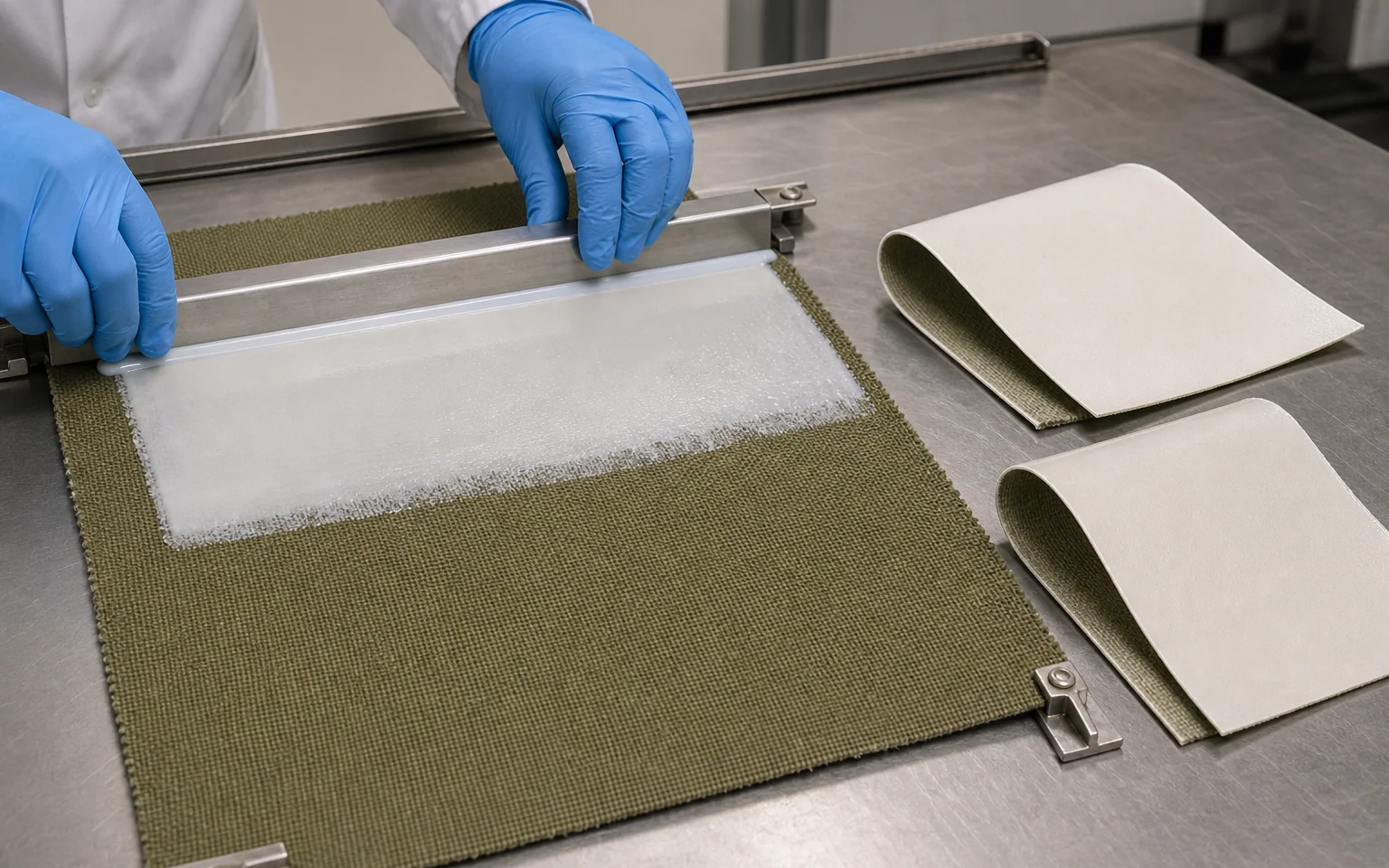
Textile coating performance depends on fabric structure, coating weight, knife gap, additives, drying condition, hand feel, water resistance and yellowing evaluation.
Application requirements
What the adhesive route needs to handle
Fabric and coating weight confirmationDrying condition recordingHand feel and anti-blocking checksWater resistance and yellowing tests
Common substrates
CanvasOutdoor fabricStretch fabricTextile base cloth
Common failure problems
- Poor water resistance
- Stiff hand feel
- Blocking
- Yellowing
- Uneven coating
Selection logic
Start with the use case, then narrow the route by substrate, process window and failure mode.
Fabric constructionCoating weight and knife gapDrying temperatureTop coating compatibility
Recommended product routes
- AC-4903A textile direct coating acrylic emulsion for trial-based evaluation
Sample request checklist
- Fabric type
- Coating method
- Drying condition
- Target water resistance
- Hand feel or yellowing concern
Testing suggestions
Check film formation, water resistance and hand feel together
Confirm PU top coating compatibility when relevant
Recommended models
Related technical resources
Request a sample for this application
Send us your substrate, coating method and current bonding problem. We will suggest a sample route before sending detailed TDS.
Information to include
- Fabric type
- Coating method
- Drying condition
- Target water resistance
- Hand feel or yellowing concern