Test on the real molded part
Automotive Interior Component Flocking
Automotive interior flocking requires the exact molded plastic, surface treatment, part geometry, flock fiber and acceptance tests before a sample route can be approved.
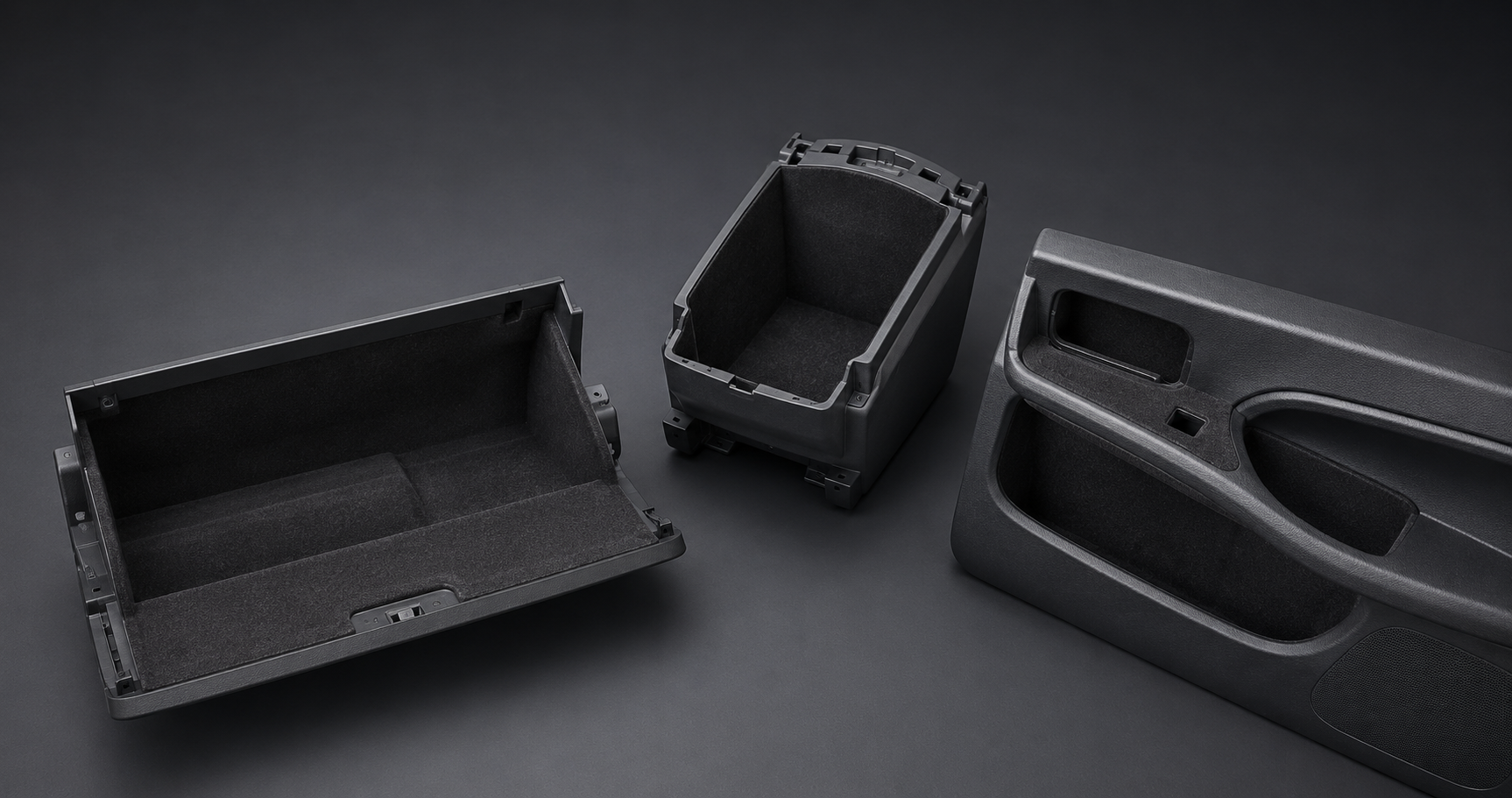
Application requirements
What the adhesive route needs to handle
Plastic and coating identifiedActual part geometry reviewedFlock and application process confirmedAbrasion, odor and heat-pressure checks defined
Common substrates
ABS interior partsPVC componentsCoated plasticsComposite trimStorage and sliding parts
Common failure problems
- Flock loss after repeated contact
- Poor coverage in recesses
- Weak bond on coated plastic
- Appearance variation
- Odor concern
Selection logic
Start with the use case, then narrow the route by substrate, process window and failure mode.
Plastic and surface treatmentRecess depth and spray accessFlock type and densityDrying windowAcceptance method
Recommended product routes
- Application-matched automotive interior flocking route after the plastic, coating and part geometry are reviewed
Sample request checklist
- Part name and plastic
- Surface coating or treatment
- Flock specification
- Spray, flocking and drying process
- Required abrasion, odor and aging tests
Testing suggestions
Check corners, recesses and repeated-contact areas
Agree on abrasion, heat-pressure, odor and appearance criteria
Product route after application review
No model is listed for this application without reviewing the actual substrate and process. Send the items below and we will identify the closest sample route.
- Part name and plastic
- Surface coating or treatment
- Flock specification
- Spray, flocking and drying process
- Required abrasion, odor and aging tests
Related technical resources
Water-Based Flocking Adhesive Selection by Substrate
Flocking adhesive selection changes when the substrate moves from paper or ABS to flexible PVC, PP, PE, metal or glass.
Flocking Adhesive Film Thickness and Open Time
Flocking adhesive film thickness and open time affect fiber anchoring, surface feel, drying speed and failure risk after rubbing or aging.
FAQ
Is a flat plastic coupon enough for automotive interior approval?
Usually not. Recesses, corners, coatings and repeated-contact areas should be checked on the actual molded part.
Request a sample for this application
Send us your substrate, coating method and current bonding problem. We will suggest a sample route before sending detailed TDS.
Information to include
- Part name and plastic
- Surface coating or treatment
- Flock specification
- Spray, flocking and drying process
- Required abrasion, odor and aging tests